


Cuba in a Glass: Summer 2026 Tasting Flight
I’ve wanted to do a series like this for a while. Less focused on tasting notes or scores, and more on the rums themselves and how the bottles you choose, and the order you place them in, can tell a story and connect back to a theme.
In future flights I’ll explore cask finishes, ageing, production styles, and some looser themes too but for this first one, I wanted to start with a region I enjoyed early in my rum journey and keep coming back to: Cuba.
The region.
Cuba makes for an interesting corner of the rum world. It carries one of the most romanticised origin stories in the category, with deep roots in cocktail culture and a history shaped as much by politics as by production. The Daiquiri, the Mojito, Prohibition-era America, Hemingway, the revolution: Cuba’s rum history is hard to separate from everything else around it.
In conversations with other rum enthusiasts, I find Cuba often gets passed over in favour of other Caribbean islands. Part of that might be familiarity (The light, dry, column-distilled style is so widely known that it can feel like there’s little left to discover) and I’m sure the Cuban government imposed limit on ABV doesn’t help either. Cuban rums are rarely bottled above 40% by domestic producers, which can make them easier to overlook in a category where cask strength releases and high-proof expressions get a lot of attention. But the more I’ve explored it, the less either of these arguments seem to matter.
Cuba’s rum-producing regions are more varied than the broad reputation suggests. The west of the island, around Havana, produces a style that tends to be intense, dry, and punchy. The east, centred on Santiago de Cuba, leans toward something smoother and more fruit-forward. And in the central provinces there’s a third style that sits somewhere between the two. I hadn’t really thought about Cuban rum in those terms until recently, and I wanted to build a flight that tested that idea: starting in the east, moving to the centre, and ending with something that resists easy placing.
The flight.
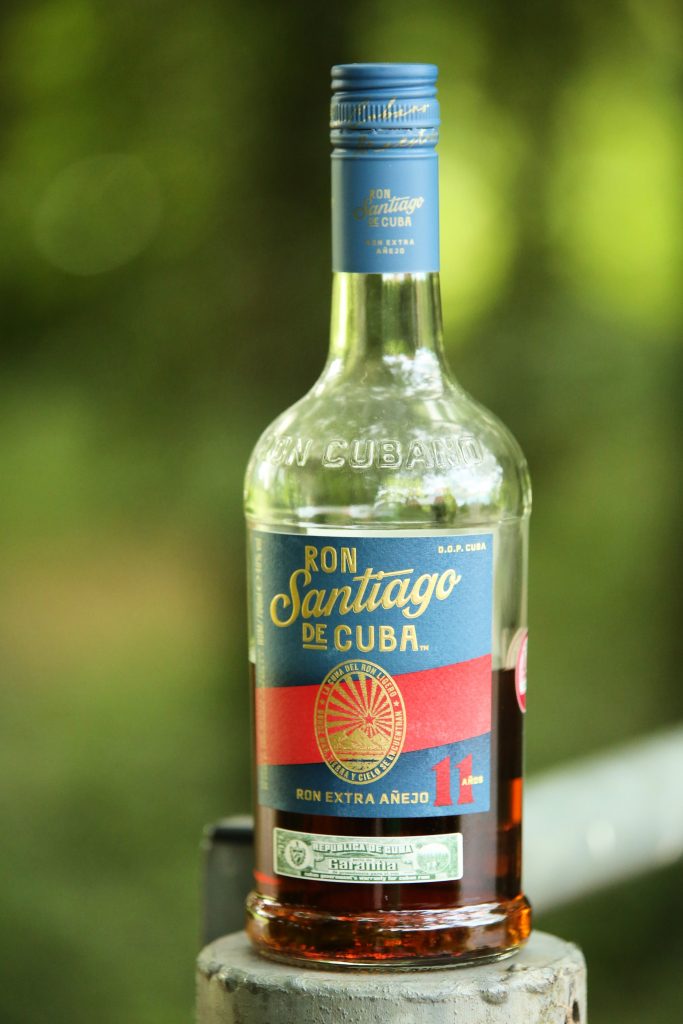
Bottle 1. Ron Santiago de Cuba 11 Year Old
If I was putting together a Cuba flight, Santiago de Cuba was always going to be on the table. The question was which bottle, and where in the order. I settled on the 11 year old as the opener, and it felt like the right call. It’s a blend of rums aged a minimum of eleven years in reused white oak casks, produced in the city that gives it its name.
What I find interesting about the Santiago 11 is how much it delivers without ever pushing too hard. The eastern style reputation for being smoother and more fruit-forward holds up here, though there’s more structure underneath than that description implies. It’s approachable, but it’s not simple, and that makes it a good opener for a flight like this: it sets a clear reference point without dominating what comes after.
Bottle 2. Eminente Reserva 7 Year Old
Eminente has a very distinct approach to Cuban rum.
What sets it apart technically is the high proportion of aguardiente in the blend, around 70%, compared to the 10% or so you’d find in most Cuban rums. These are more aromatic, lower-distilled spirit cuts, aged for at least seven years in ex-whisky casks, and the result is richer and more structured than most Cuban rums at this age.
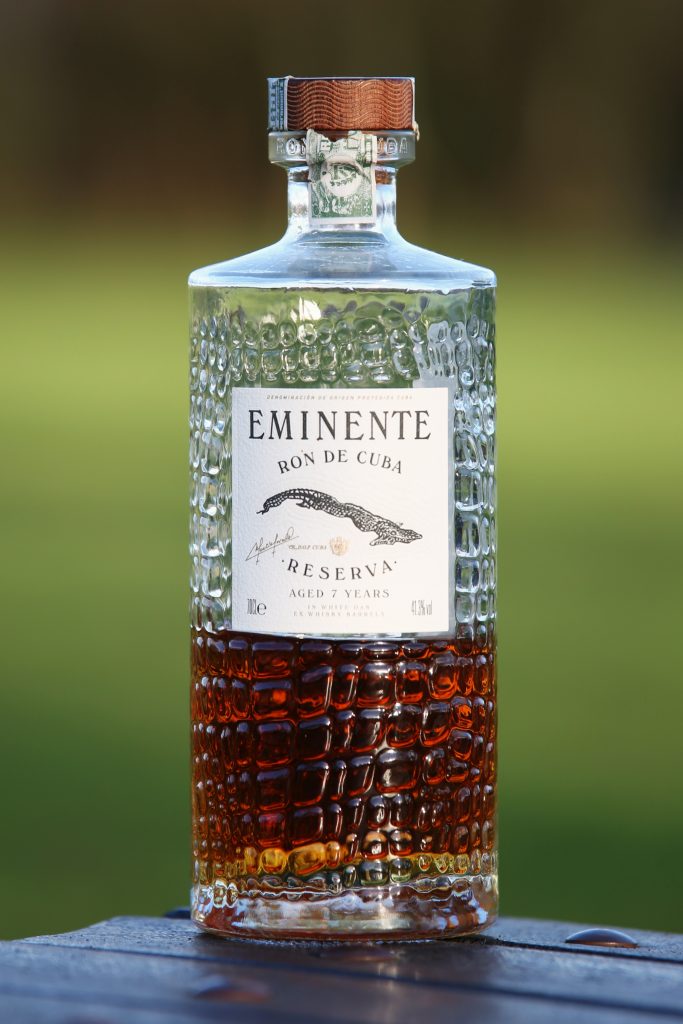
Sitting in the middle of this flight, Eminente acts as a bridge. It has the clean column-still backbone you expect from Cuban rum, but the aguardiente influence and the ex-whisky maturation push it somewhere richer and more layered. It earned its place in the middle of this flight.
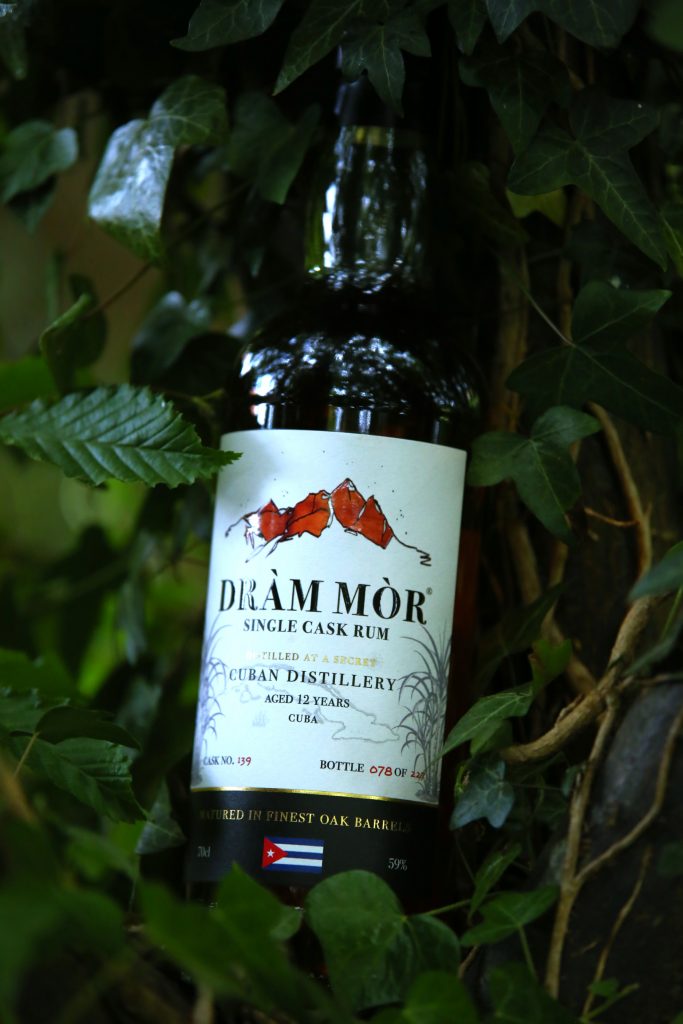
Bottle 3. Drám Mòr Secret Cuban Distillery
This bottle adds something different to the mix. Unlike the other two, which are brand releases shaped by house style and blended for consistency, this is a single cask snapshot from the Scottish independent bottler Drám Mòr. One cask, bottled at cask strength with no blending. Just 227 bottles.
We don’t know which distillery this came from. Drám Mòr don’t say, and speculating too confidently feels pointless. What we do know: it was distilled in 2009, matured in an ex-bourbon barrel, and bottled at 59% ABV (unusual for Cuba!) after twelve years.
What this bottle does for the flight is remove the question of house style entirely. There’s no Maestro’s hand shaping this toward a particular expression of Cuban rum. It’s just the distillate, the cask, and time. That makes it a useful contrast to the first two, and a reminder that even within a style defined by its lightness and refinement, there’s room for something with more edge.
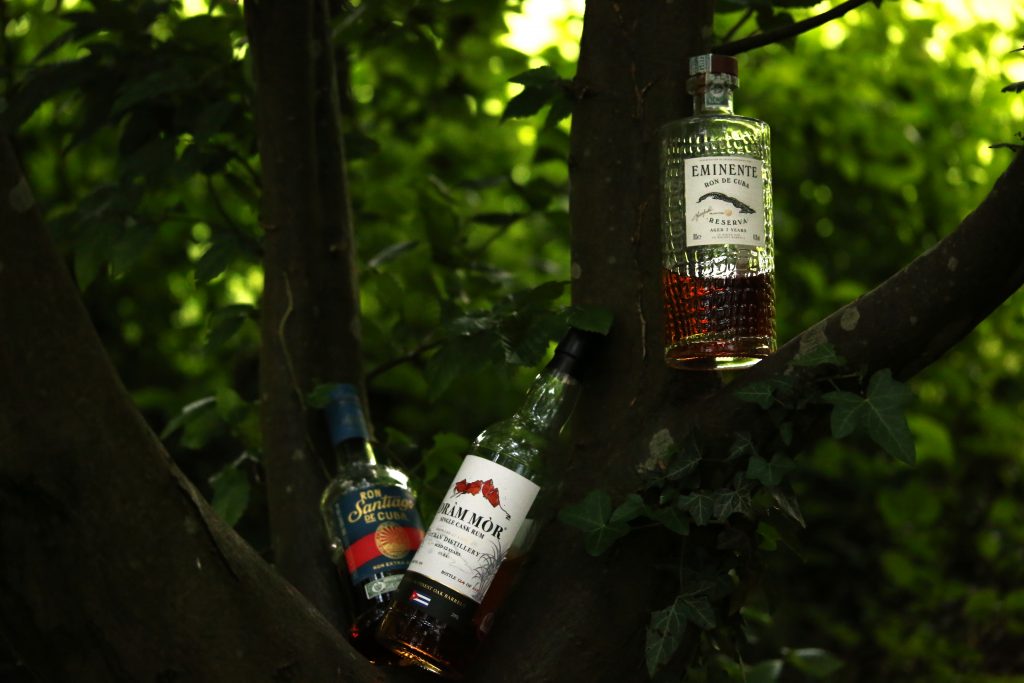
What I got from this tasting flight.
What struck me most across these three rums wasn’t the differences between them so much as how clearly each one reflected a different relationship with the Cuban style.
Santiago de Cuba 11 is the tradition: refined, regional, and quietly confident in what it is. Eminente is tradition reinterpreted, the same building blocks rearranged with a different intent and a different audience in mind. The Drám Mòr is something else entirely: Cuban rum seen through the lens of an independent bottler, stripped of brand narrative and regional positioning, and left to speak for itself.
I don’t think any one of them tells you more about Cuban rum than the others. What the flight as a whole does is show you how much space there is within a style that’s often described in terms of what it isn’t. Not funky. Not heavy. Not pot still. Cuban rum defined by absence is doing it a disservice. This tasting reminded me of that.
A note on this series: Each quarter I aim to put together a small, themed tasting flight and share what I found or why I chose the Rums I did.

Leave a Reply